Description
KARMA EVO Altus
Stand up, Stand out.
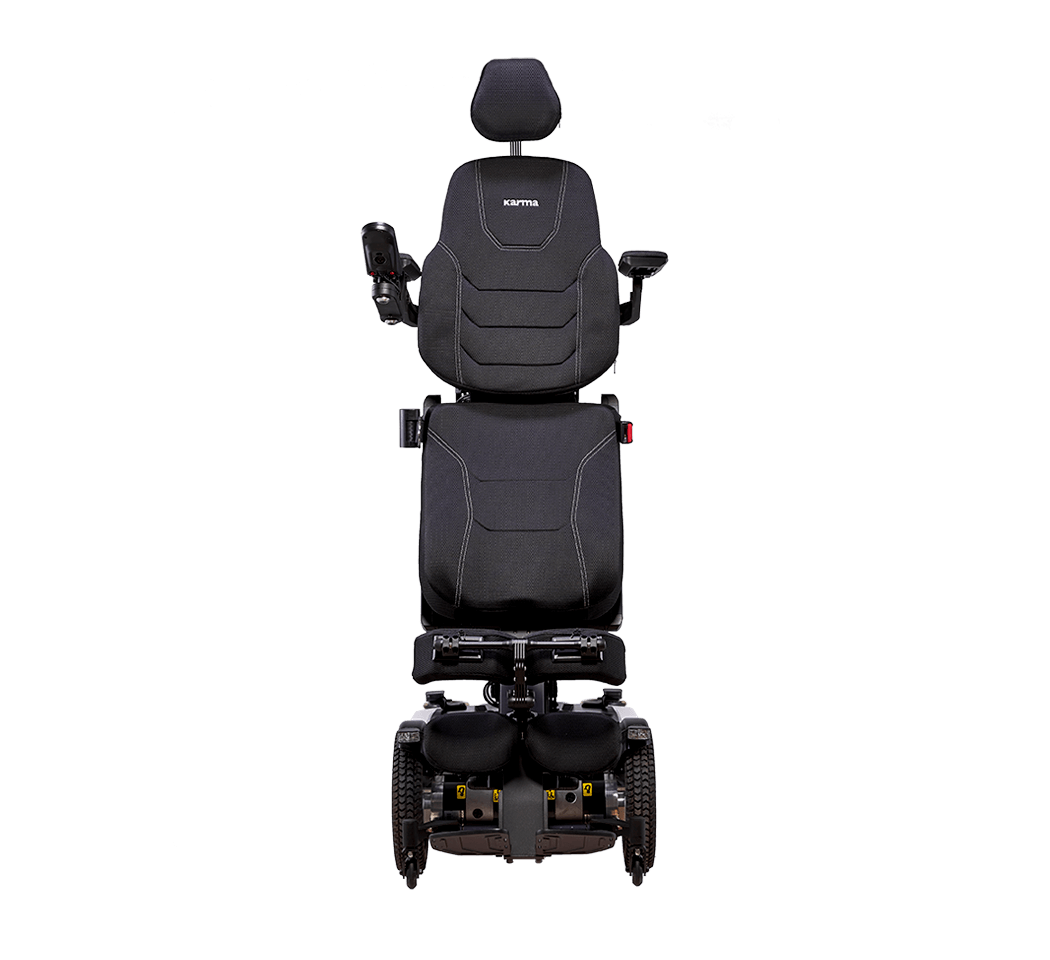
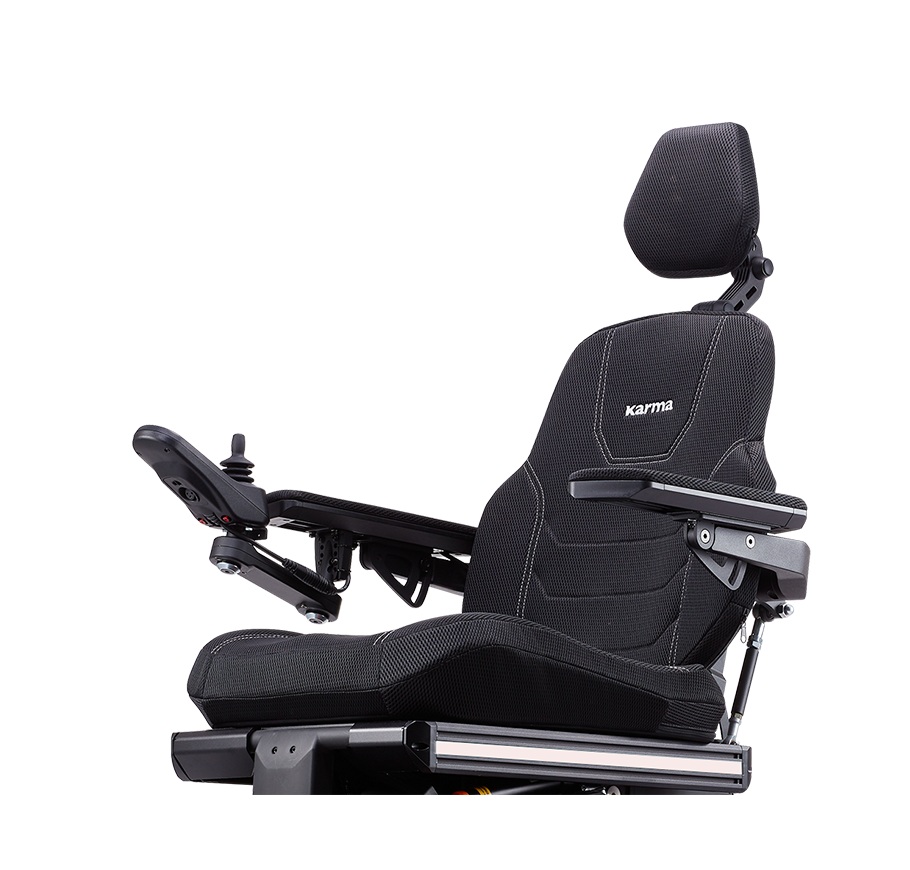
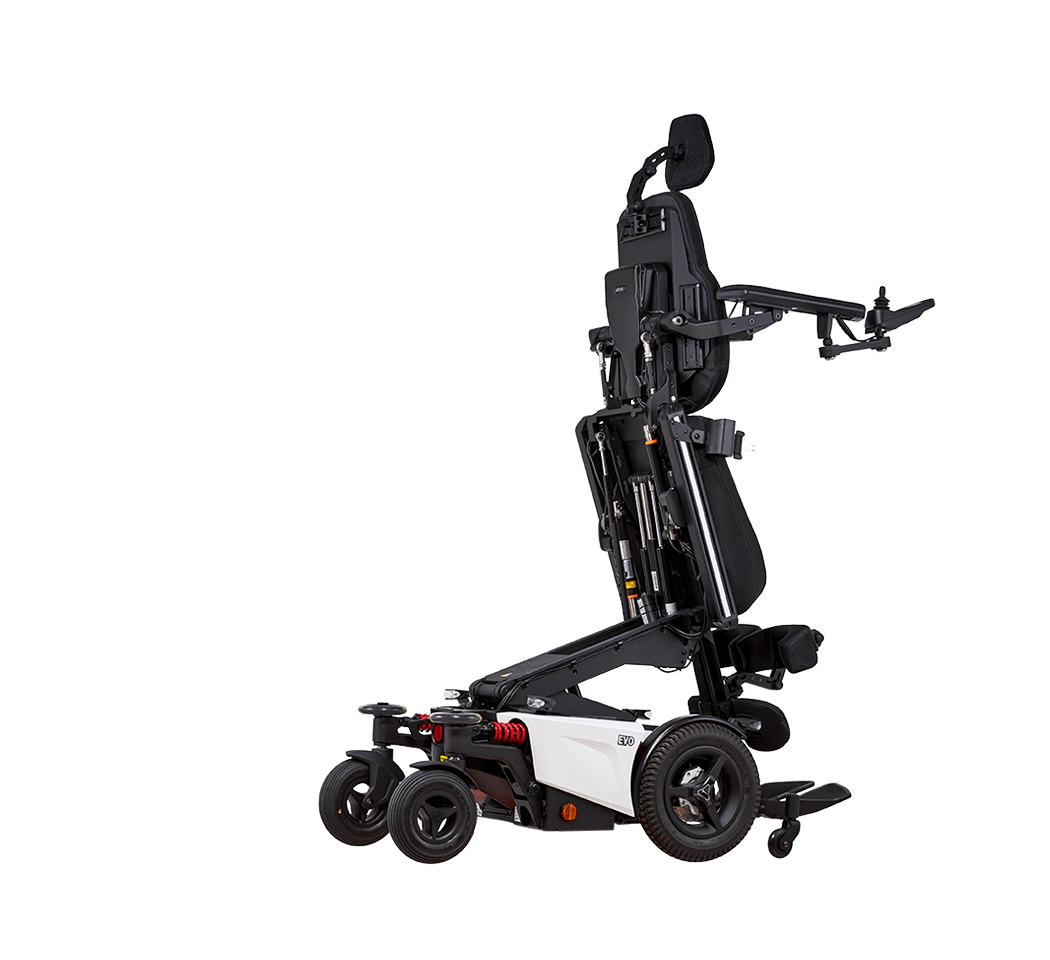
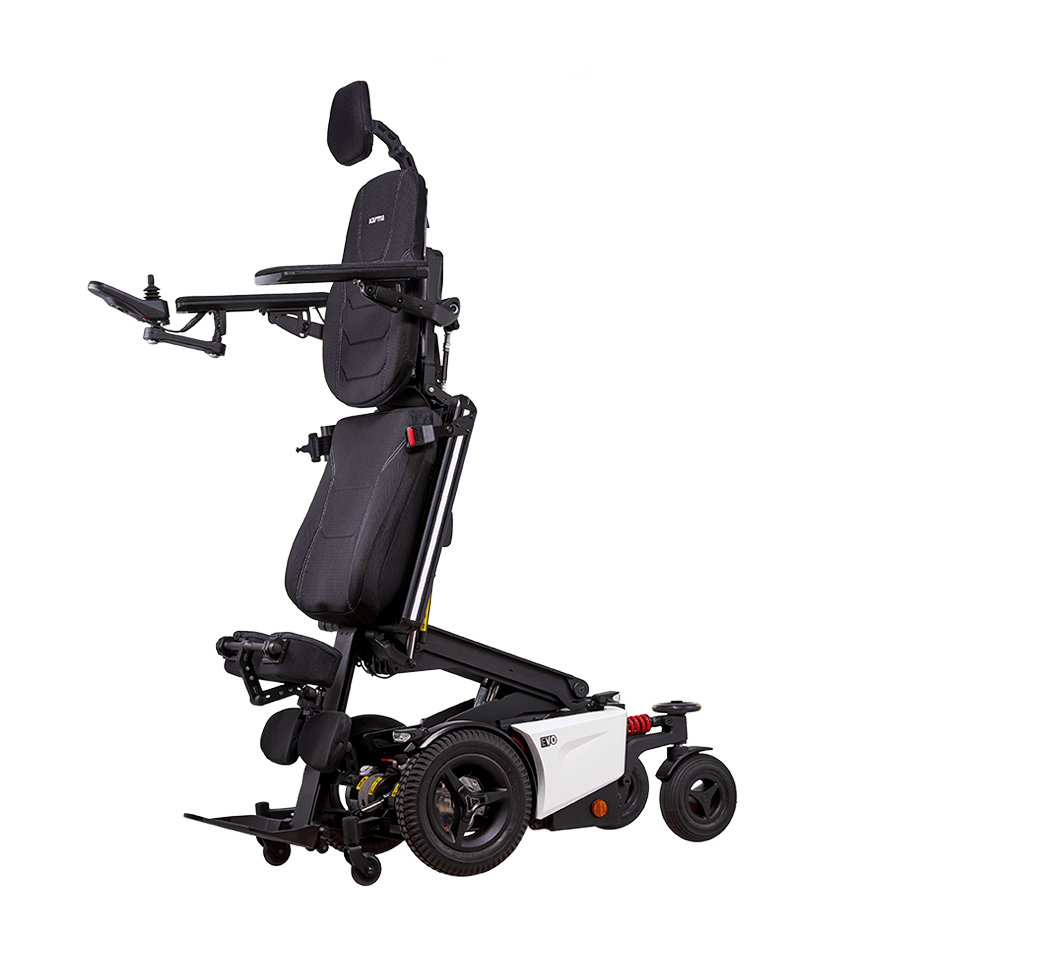
If living independently is the ultimate goal, being able to stand up is an important step. The EVO Altus (EVO-ALT) is specially designed to help those who have the very limited body control to achieve this step. The chair provides not just one, but three different ways to stand up: sit-to-stand, recline-to-stand, and lie-to-stand. The standing modes along with other features are configurable to fit the user’s need and to help the user reach independence on wheels.
The Health Benefits of Standing
Effectively enhances blood circulation and preserves physical health. Reduces muscular fibrosis and arthrofibrosis. Enhances physical circulation by improving heart and lung functions and promotes gastrointestinal movement. Lowers the risk of heart disease and improves circulation, urinary health, bowel function, and bone density
Biomechanical Positioning
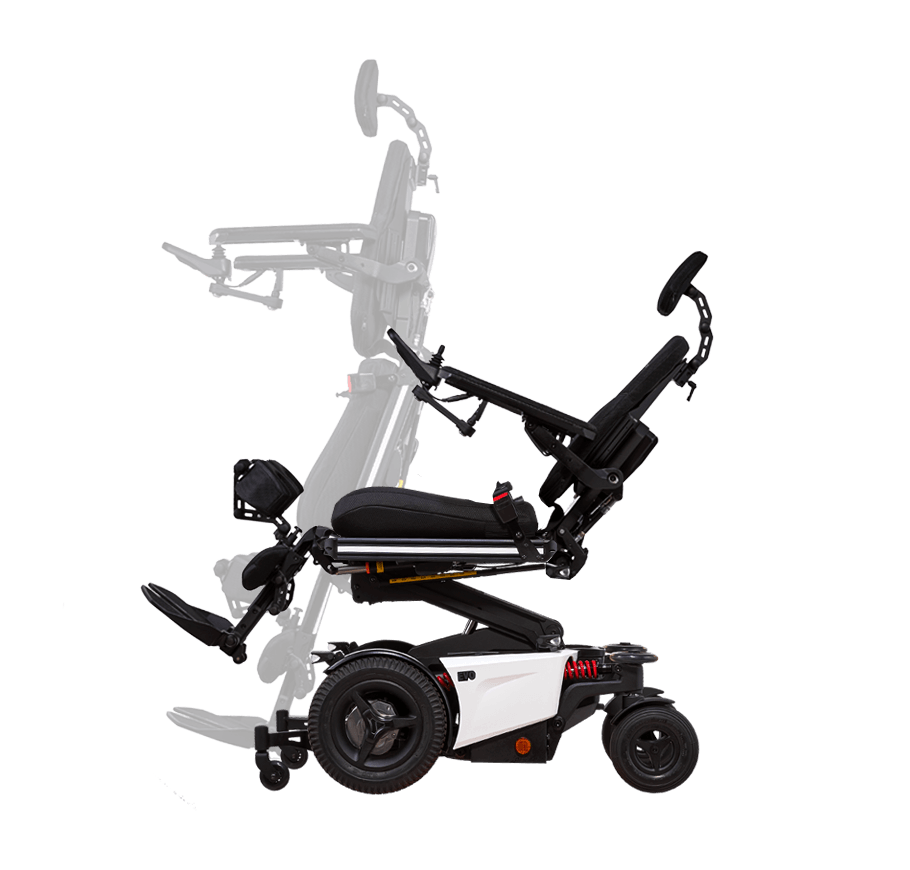
Because it is not always easy to adapt to a new living situation, the Evo Altus is designed with various biomechanic positioning functions to help the user with the transition. It includes power tilt, power recline, power elevating seat and power stand up. The seat will traverse with the body, thereby reducing the sheer force to a minimum and most importantly, keeping all the supports in the correct alignment with the body.
Compact yet Powerful
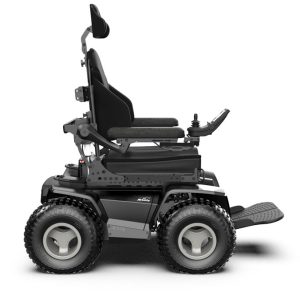
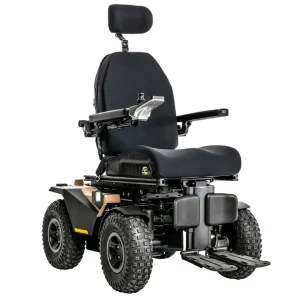
The EVO Altus has a low seat-to-floor height and a battery capacity up to 80 AH. The compact design and powerful battery put no restrictions on the seat positioning. This ensures easy access to the steering wheel when driving a car or van, expanding the transportation options.
Sit-to-Stand
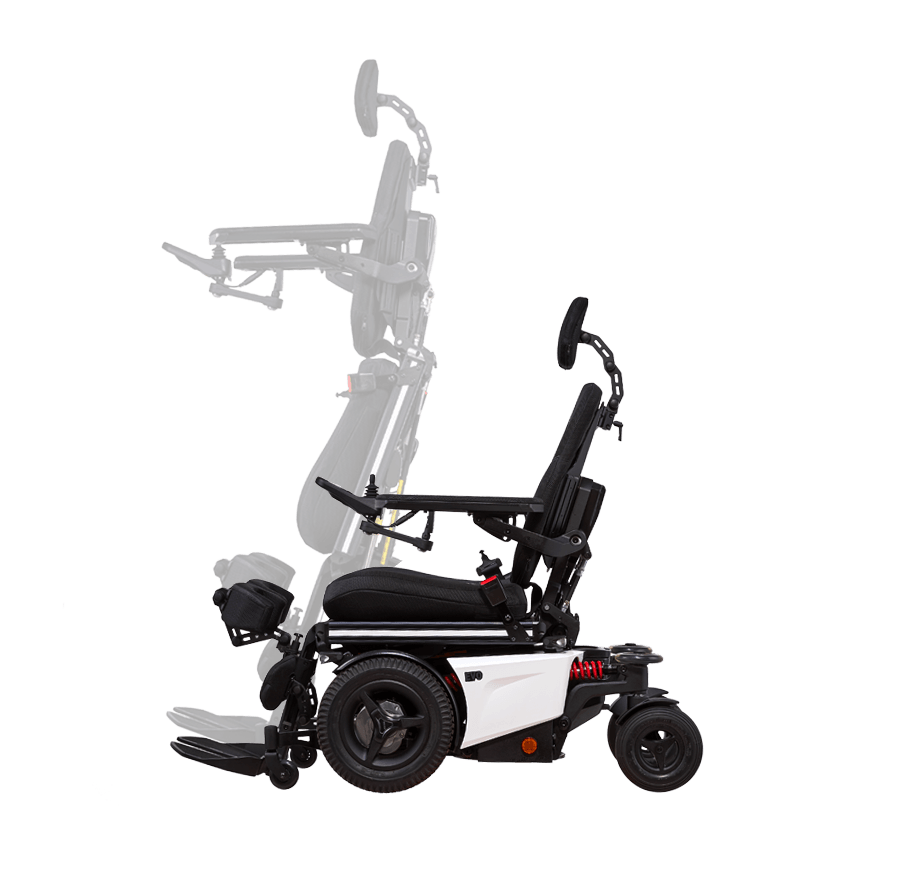
This function allows the user to go from a sitting position to a standing position. This is the most natural way to stand up and does not take a lot of time and space. Users who have a normal range of joint motion as well as healthy blood circulation, will find this mode best suits their needs.
45° lay-to-Stand
This function allows the user to go from a 45-degree recline to a standing position. This is useful for those who have a limited range of joint motion. Instead trying to sit up straight to stand up, the user can use the recline function and then go from a reclined position to a standing position.
Lay-to-Stand
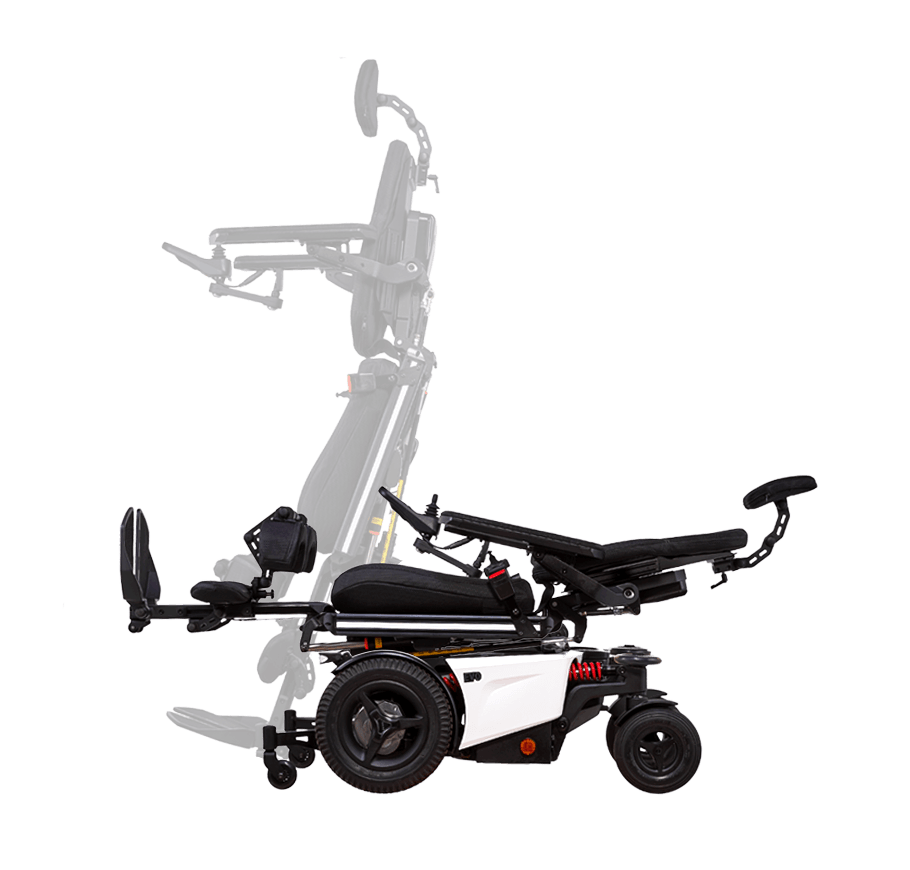
This function allows the user to go from a supine position to a standing position. Standing from the supine position requires the least amount of body and joint movements. This function not only prevents lateral supports from being mispositioned but also gives users with intense postural hypotension the opportunity to stand like everyone else.
Excellent Outdoor Performance
The chair has three driving speed: 4/6/8mph. In conjunction with the chassis’ proven hydraulic independent suspension system, maximizes the comfort and quality of the ride.
Easy to Configure
Small adjustments can mean huge improvements for the user’s well-being. When developing the EVO Altus, the primary focus was improving the ease of adjustment and maintenance. For example, service technicians can extend the seat depth without adding any additional components, such as linkage bars.
R-Net Control
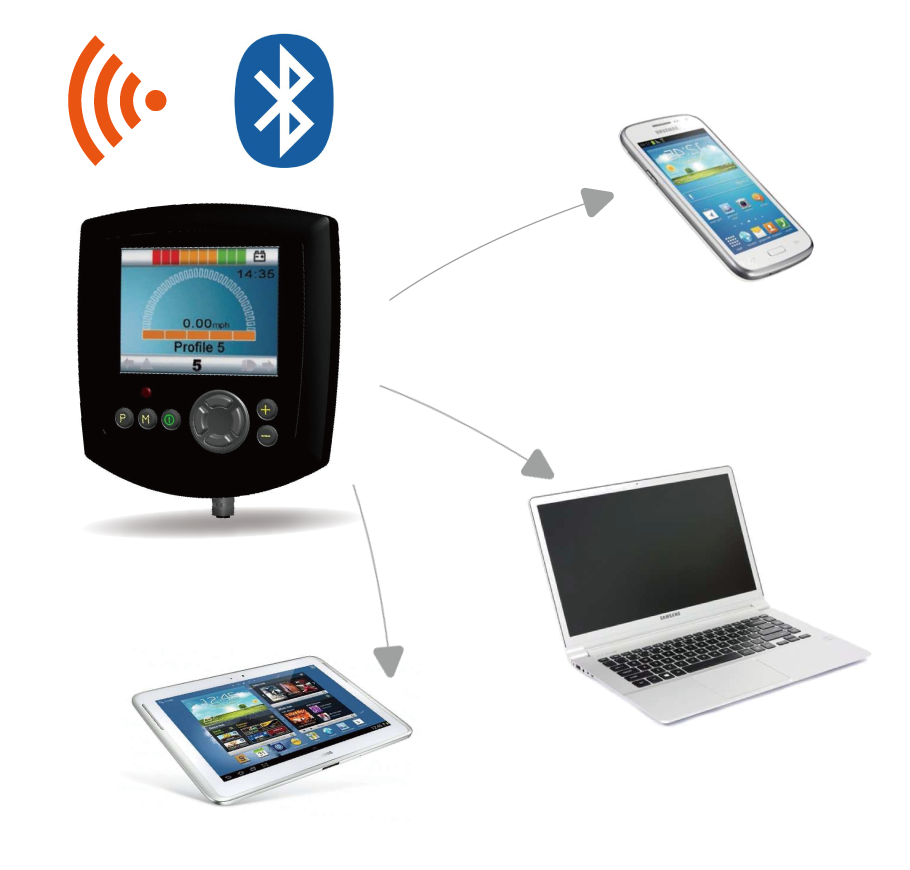
The R-Net-control system comes standard with the EVO Altus. Operate many electrical functions of the chair using the joystick. This system also serves as a platform for a wide variety of specialized steering controls such as chin control, head control and switch control. It even has the ability to operate infrared and Bluetooth devices using the joystick with R-Net controls. The things you can do with R-Net control are endless.
Crash Test Approved
The EVO Altus is approved for transportation in accordance with ISO 7176-19. This means it is suitable to be used as a seat in a motor vehicle for transportation.
| Product Model | Evo Altus | |
| Seating System | Minimum | Maximum |
| Nominal seat width (mm/in)* | 420 / 17 | 520 / 21 |
| Nominal seat depth (mm/in)** | 400 / 16 | 600 / 24 |
| Backrest height without cushion (mm) | 565 | 725 |
| Backrest height with cushion (mm) | 510 | 670 |
| Headrest height above seat (mm) | 730 | 890 |
| Armrest to seat distance without cushion (mm) |
250 | 370 |
| Armrest to seat distance with cushion (mm) | 180 | 300 |
| Front location of armrest structure (mm) |
0 | 410 |
| Seat surface height at front edge without cushion (mm) |
415 | 865 |
| Seat surface height at front edge with cushion (mm) |
490 | 940 |
| Footrest to seat distance without cushion (mm) |
255 | 555 |
| Footrest to seat distance with cushion (mm) | 330 | 630 |
| Effective seat width (mm) | 420 | 520 |
| Effective seat depth (mm) | 400 | 600 |
| Seat plane angle (X°) | 0 | 50 |
| Backrest angle (X°) | -5 | 90 |
| Seat to backrest angle (X°) | 85 | 180 |
| Leg to seat angle (X°) | 85 | 180 |
| Driving Characteristics | Minimum | Maximum |
| Drive wheel size | 3.00 – 8 (14″) | |
| Rear caster size | 2.80/2.50 – 4 (9″) | |
| Overall length with legrest (mm) | – | 1200 |
| Overall width (mm) | 610 | 660 |
| Overall height (mm) | 1115 | – |
| Folded length (mm) | 1150 | – |
| Folded width (mm) | 610 | – |
| Folded height (mm) | 650 | – |
| Total mass (kg) | – | 185 |
| Total mass without batteries (kg) | – | 143 |
| Mass of the heaviest part (kg) | – | 135 |
| Maximum user weight (kg) | – | 136 |
| Drive range (km)*** | – | 54 |
| Maximum speed forward (km) | – | 12 |
| Minimum braking distance from max speed (mm) |
2000 | – |
| Obstacle climbing (mm) | – | 70 |
| Ground clearance (mm) | 70 | – |
| Minimum turning radius (mm) | 750 | – |
| Minimum turning radius without user (mm) |
750 | – |
| Reversing width (mm) | 750 | – |
| Static stability downhill (X°) | 9 | |
| Static stability uphill (X°) | 9 | |
| Static stability sideways (X°) | 9 | |
| Dynamic stability uphill (X°) | 6 | |
| Ability to climb rated slope (X°)*** | 12 | |
| Electrical System | ||
| Motor power (W) | 320 | |
| Battery capacity (Ah) | 80*2 | |
| Charger output current (A) | 8 | |
| Battery Compartment (L x W x H) (mm) | 265 x 175 x 235 (Single Compartment) | |